SENSEI
Those who made the road before
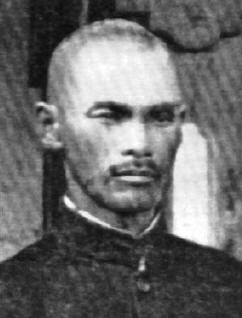
Kentsu Yabu
1866-1937
Kentsu Yabu was born in 1866 and became the senior student of Yasatsune "Ankoh" Itosu.
Itosu was almost 80 years old when karate was introduced to the curriculum of the Normal School, and much of the teaching was carried out by his senior student Kentsu Yabu. Yabu is probably best known today as Itosu's assistant, yet he was an outstanding karate expert in his own right.
Kentsu Yabu was commonly knows as "Gunso", or sergeant, a reference to his career in the Japanese Imperial Army. Apparently he went past the rank of sergeant to become a 2nd lieutenant, and the ability to make his way in the Japanese Army suggests a certain strength of character and aptitude for military life. The Okinawans had never been a military people and the older generation opposed all forms of military service. The conscription laws enforced throughout the rest of Japan in 1873 were not extended to Okinawa till 1898. Even then the proportion of islanders rejected for service because of illiteracy, shortness, and so on, was the highest of any Japanese prefecture. Those few who had served under the harsh discipline of Japanese army life were generally much tougher than the average Okinawan.
It is said that Yabu saw action on the Chinese battlefront during the Sino-Japanese War of 1894/5.
In Yabu's time the Okinawans serving in the Army had been a lowly regarded minority. They would often be victimised and beaten. Kentsu Yabu would not stand for this and fought back. Incidents occurred which led to an official investigation. Yabu was cleared of all blame and became a hero to his fellow Okinawans.
When Yabu was a sergeant he was challenged to fight by another soldier. When the man attacked, Yabu struck him - killing him instantly. There was an enquiry and the investigating officer, who had heard of Okinawa's karate, asked Yabu if he had used that technique. Yabu replied that he had struck with the open palm, not the fist. If he had used his fist, he explained, the opponent's ribs would have been smashed. He was ordered to strike a nearby tree using his fist. The tree split where he had struck it, greatly surprising the investigating officer. The outcome of all this was that the cause of death was never made clear in the official report and Yabu's career was unaffected.
The reference to Yabu's palm strike is interesting, because he was supposed to be an expert in open handed techniques. His favourite kata was 'Gojushiho' which contains a variety of open-hand waza.
Yabu, big and broad shouldered, was regarded throughout Okinawa as a powerful karateka and genuine expert. History tells us that he once defeated Choki Motobu. This was not in a karate contest but rather in a bout of tegumi - an Okinawan form of wrestling. Yabu was able to pin Motobu after a contest lasting twenty minutes.
When he retired from the Army, Yabu Sensei became a teacher for the Cadet Force at the Okinawa School for Teachers. He taught karate to students for many years and his army experience in handling large bodies of men must have been useful in organising classes. For generations before this karate had been taught in secret and a master would have only a few students, sometimes only one. With the introduction of karate into the educational system a means had to be found of instructing larger classes, the "militarisation" of karate teaching might be traced back to Gunso Yabu. "Militarisation" is not meant in a negative sense but rather refers to the training of large classes by repeating techniques to a count. Yabu's teaching was disciplined and testing. He stressed repetition and mastery of one kata before moving onto the next.
He retired from the teachers' school with tuberculosis. Every morning he would get up and enjoy a walk. Sometimes he would have to stop to cough up blood and phlegm, and on such occasions he would shout "go to hell!" before turning back for home.
Master Yabu died in 1937 at the age of 71.