
SENSEI
Those who made the road before
Walt Dailey
Zentokukai - Okinawa Shorinjiryu Toude

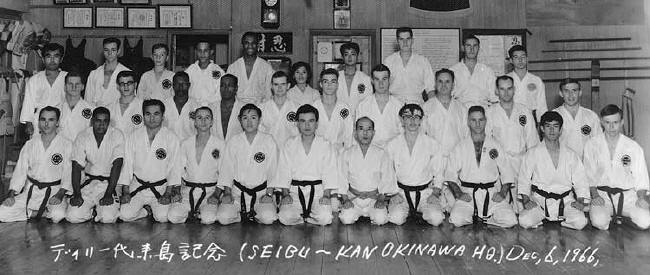
Walter P. Dailey was born on July 17, 1940. He started his karate instruction in late 1960 in Okinawa. Under the tutelage of Master Zenryo Shimabukuro, the founder of the Seibukan school of Shorin Ryu, Walt Dailey received the rank of Shodan in 1962, and Yondan in 1966.
Upon his return to the US he opened the first commercial Seibukan dojo in North America in early 1963 in Norwood, PA. At that time he was the president of the East coast branch of the All Japan Karate-do Federation.
From 1978-1982 he was the vice president of the International Seibukan Karate-do Association. He is one of the founders of the Zentokukai in 1997 and is presently chairman of that same association and the Shorin Ryu style head of the Guardian Karate Association.
Walt Dailey has been teaching for over 40 years.
Zentokukai Patch:
What does the purple Zentokukai patch represent?
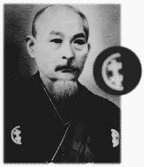
© Okinawa Shorinjiryu Toude Zentokukai
The Zentokukai patch is a representation of the Kyan (pronounced "Chan" in old Okinawan language Hogen) family crest as shown here by Kyan's father Chofu, wearing a traditional coat bearing 1/2 of the crest on either side.
This symbol is unique to the Zentokukai, and it unquestionably links us to the Shorinji-Ryu School, which is Kyan Chotoku's unique blend of Karate.
The color purple is the chosen color for the Kyan family crest, and in ancient Okinawa, it represented royalty and a high status in the court of the Shuri castle. The crosshatching bars represent the frame (wooden structure) of an old water well. The Kyan's were 11th generation descendants to King Shosei of the Ryukyu Kingdom. Kyan's father Chofu, was the steward to the last living king of Okinawa, King Shotai.
 Link to article:
Seibukan History, Article from Bugeisha Magazine (1998)