SENSEI
Those who made the road before
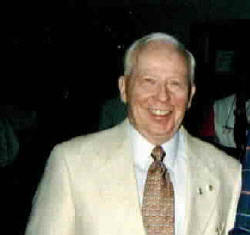
Ralph Lindquist
Isshinryu lineage: Tatsuo Shimabukuro → Harry G. Smith → Ralph Lindquist
Born January 1, 1929. Ralph Lindquist received his first exposure to Asian martial arts during self-defense training in the Army. The Korean War was in progress and Lindquist volunteered for duty with an Army reconnaissance company. Recon men must be highly skilled in armed and unarmed personal combat, since their missions often require them to operate alone, behind enemy lines. His training in judo and jujitsu proved to be very useful and interesting.
After the war, Mr. Lindquist spent two years in Japan studying Nichiren Buddhism at the six hundred year old Minobusan Temple, located about halfway between Kyoto and Tokyo. He also pursued his study of Judo, eventually earning a brown belt in that art.
Upon his return to the United States, Mr. Lindquist found Harry G. Smith's Isshinryu dojo in Harrisburg, PA and switched his training to karate. When Mr. Smith opened a second school in Pittsburgh, PA, Lindquist gradually assumed greater teaching responsibility at the Harrisburg school and eventually assumed the duties as chief instructor.
In 1963, Lindquist and other students from both the Pittsburgh and Harrisburg schools traveled with Mr. Smith to Canada to the first karate tournament ever held in that country. The tournament was sponsored by Mas Tsuroka, Canada's foremost instructor of the time. Although still a brown belt, Mr. Lindquist competed in the black belt division winning several hard fought matches before being eliminated.
The very next day, he tested for his black belt in front of Sensei Smith and Sensei Tsuroka, and was promoted on the spot. As a black belt, Sensei Lindquist became known as a very difficult opponent on the tournament circuit. He competed in many well-known tournaments of the time including Robert Trias' World Karate Tournament in Chicago and at the Southeastern Karate Tournament, one of the largest competitions of that time.
Sensei Lindquist would have the opportunity to train directly under Master Shimabuku in 1966 during his Pittsburgh visit. He would go on to establish the Isshinryu Karate Club of Pennsylvania, a not for profit organization whose members drew greatly from the Harrisburg branch of the Smith school. This organization continues to the present day with associated schools throughout the country.